Every Castlevania and Igavania Ranked From Hardest to Easiest
Player votes as of October 2026
Castlevania has been handing out beatings since 1986, and the series has never really agreed with itself about how hard it should be. So we took all 32 Castlevania games plus the three Bloodstained games Koji Igarashi made after he left Konami, 35 in total, and lined them up hardest to easiest. An arcade cabinet most people have never touched takes the crown at 9.13/10, and the entry everyone calls the best in the series lands near the bottom.
The list has two switches on it. Metroidvanias only drops the classic and 3D games and leaves the eight built on the Symphony of the Night template. Castlevanias only drops the three Bloodstained games. Tick both and you get the seven Castlevania metroidvanias on their own. Every entry keeps its place in the full 35 alongside its place in whatever you have filtered to, so you can watch a game move.
One caveat. These are player-submitted scores out of 10 and sample sizes vary a lot, so a Game Boy cartridge carries less weight here than Symphony of the Night does. The top and the bottom are solid. The middle is a rough consensus.
The Classic Entries Own the Top of the List
The split in this ranking is not subtle. Every one of the top twelve games is a stage-based classic entry, and all twelve rate above 8.0. Fixed stages, no levelling, knockback that treats a single mistake as a pit death, and a whip that gets worse when you are already losing. The design simply did not include a way out. Three of the four hardest games in the series are also ones you cannot buy on a modern storefront without a collection bundle, which is its own kind of difficulty.
The Exploration Era Softened Everything
Once Symphony of the Night introduced experience points and a save room, the series stopped being able to hurt you the same way. Tick Metroidvanias only and the effect is stark: not one of those eight games reaches the top twelve overall, and they average 6.67 against 7.90 for the classic 2D entries. The hardest of them, Order of Ecclesia, sits 13th, and it got there by deliberately pushing back against the trend the other seven follow. Bloodstained: Ritual of the Night lands right in the middle of that group at 27th, which is the telling part. The ceiling is set by the template rather than by who is holding it.
Every Castlevania and Igavania, Hardest to Easiest
Showing all 35 games. Tick a filter to narrow the list and renumber it.
- 1
Haunted Castle
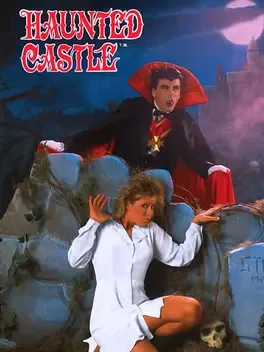
The hardest game in the series is the one most people have never played, and it earned the spot. Konami built this arcade cabinet to eat coins: a two-hit health bar, knockback that launches Simon into whatever killed him, and a whip that downgrades the moment you take damage. The 9.13 is the highest score anywhere in this list and nothing else comes close.
- 2
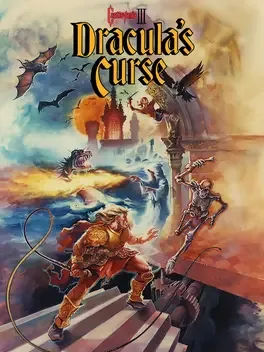
Castlevania III: Dracula's Curse
The hardest Castlevania that normal people actually own. Dracula's Curse layers branching routes and swappable companions over NES physics that were already unforgiving, then sends you into the collapsing clock tower and the gear stages where one knockback means restarting the whole screen. Choosing Grant to cheat the platforming is less a strategy than a survival tactic.
- 3
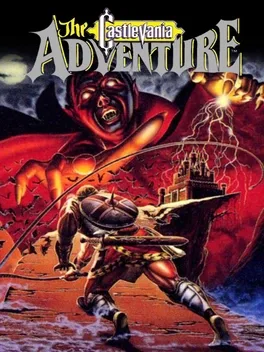
Castlevania: The Adventure
Christopher Belmont moves like he is wading through syrup, there are no sub-weapons to bail you out, and your whip drops a tier every time something touches you. Stage three is a vertical climb across disappearing blocks with spikes underneath, which is the moment most Game Boy owners quietly put the handheld down. Slow and mean in equal measure.
- 4
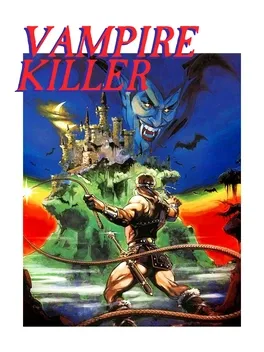
Vampire Killer
The MSX2 cousin of the original, and the version that swapped scrolling for flip-screen rooms and a hunt for keys. Progress depends on whipping the right candle in the right room, enemies respawn the instant you step back, and the layout gives you almost nothing to work with. Difficulty here is as much about obscurity as it is about reflexes.
- 5
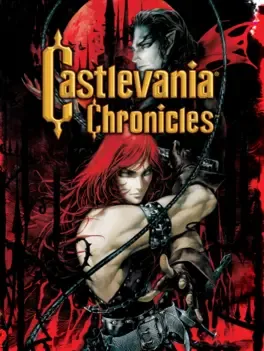
Castlevania Chronicles
The Japanese home-computer Castlevania, finally localized on PS1 in 2001. Original mode is the real draw and the real problem: tight corridors, aggressive enemy placement and a boss roster that hits far harder than the NES versions of the same fights. Arranged mode softens it considerably, but the players rating this clearly went for the original.
- 6
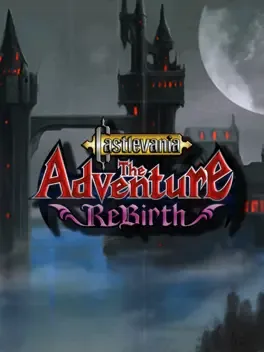
Castlevania: The Adventure ReBirth
A 2009 WiiWare remake that took the retro brief seriously. It gives Christopher sub-weapons and a usable walk speed, then spends stages four and five clawing that generosity back with spike corridors and bosses built around pattern memorization. Tied with Chronicles on score, and a reminder that a game made in the modern era can still be old-school cruel.
- 7
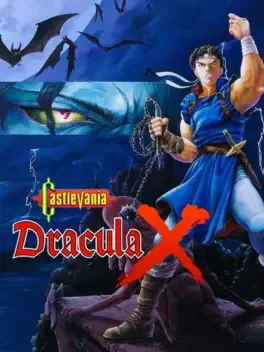
Castlevania: Dracula X
The SNES reimagining of Rondo of Blood, stripped of the branching paths and the CD audio and somehow left harder than the thing it was adapting. Richter handles stiffly, the stage design is packed with pits and Medusa heads working in tandem, and the final Dracula fight has a reputation it fully deserves. The series at its most grudging.
- 8
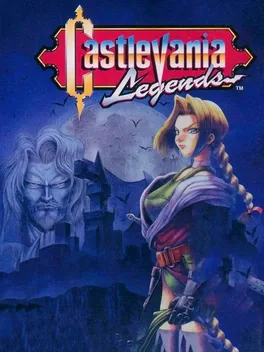
Castlevania Legends
Sonia Belmont's Game Boy outing is slow, maze-shaped and widely disliked, and the vote spread shows people cannot agree on why. Ratings here run the full width from 1 to 10, the widest split in the entire list. Burning Mode makes you briefly invincible and trivializes some fights, which is probably where the low votes come from.
- 9
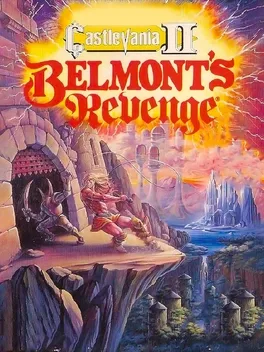
Castlevania II: Belmont's Revenge
The sequel that fixed The Adventure without going soft. Christopher moves at a sane speed and sub-weapons are back, so the challenge shifts from fighting the controls to the four castles themselves. Plant Castle in particular asks for platforming precision the Game Boy D-pad barely supports. Better designed than its predecessor and barely any kinder.
- 10
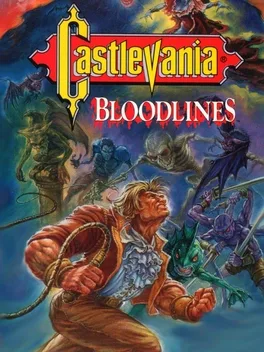
Castlevania: Bloodlines
The Genesis entry is gorgeous and genuinely tough, especially if you pick John Morris and his shorter reach over Eric Lecarde's spear. Expert mode cuts your continues and turns the back half into an endurance run, and the leaning tower stage is still one of the best set pieces Konami ever built. Underplayed, properly hard.
- 11
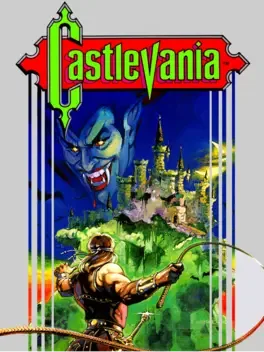
Castlevania
The one that set the template, and the benchmark every entry above it is measured against. Stairs you cannot whip from, knockback that turns a stray hit into a pit death, and Medusa heads arriving in waves over gaps. With 35 ratings it is the most-voted classic entry here, so this score is one of the more trustworthy numbers on the board.
- 12

Castlevania: Rondo of Blood
The PC Engine high point of the classic era, and the last Castlevania to sit above 8. Richter gets the Item Crash to burn hearts on screen-clearing attacks, but the branching stage routes hide the nastiest content behind alternate exits. Playing as Maria drops the difficulty through the floor, which is worth knowing before you take this 8.06 at face value.
- 13
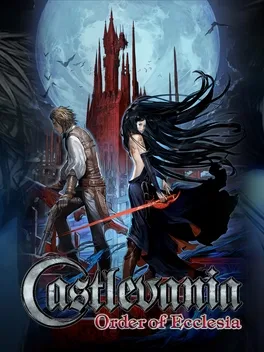
Castlevania: Order of Ecclesia
The hardest of the exploration-style entries by a comfortable margin, and the only one that cracks the top half. Shanoa starts fragile, the glyph system wants active management rather than a single overpowered loadout, and the Albus and Blackmore fights are real walls. Konami aimed this one at people who thought the DS games had gone soft, and the 7.82 says it landed.
- 14
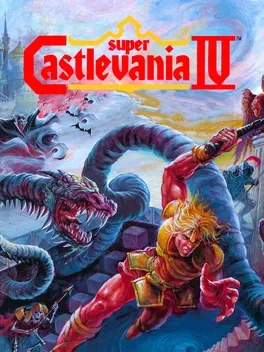
Super Castlevania IV
The eight-way whip and the mid-air whip-swinging make this the most forgiving game of the classic era, and it still rates 7.55. What keeps the number up is the back half: the rotating-room stage, the hall of dancing ghosts, and a Dracula who stops messing about. Easier than its NES siblings, which in this series means almost nothing.
- 15
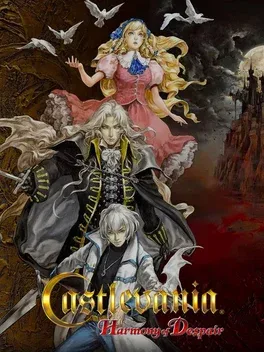
Castlevania: Harmony of Despair
A downloadable oddity built around six-player timed raids through compressed versions of older castles. With a full party it is chaos. Alone it is a stopwatch grinding you down while you hunt for gear drops that make the next attempt viable. The score reflects how many people tried to solo content that was never balanced for one player.
- 16
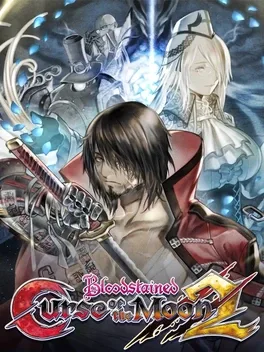
Bloodstained: Curse of the Moon 2
The sequel is the tougher of the two by a clear margin, and the back half is where it separates. Episode three withdraws the character-swapping safety net the first game let you lean on, and the boss patterns stop leaving obvious gaps. It rates above every metroidvania in this ranking, which says plenty about how little the Symphony template has to do with difficulty.
- 17
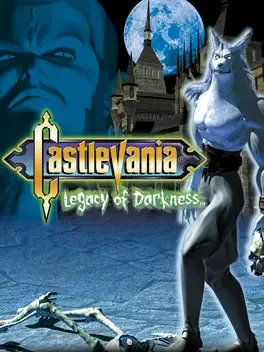
Castlevania: Legacy of Darkness
The expanded do-over of the N64 game, with Cornell and his werewolf transformation leading a longer campaign. The combat is more capable than the original, so the difficulty moves almost entirely into the camera and the jumping. Fighting a fixed viewpoint for an hour is a different kind of hard than fighting Dracula, and players scored it accordingly.
- 18
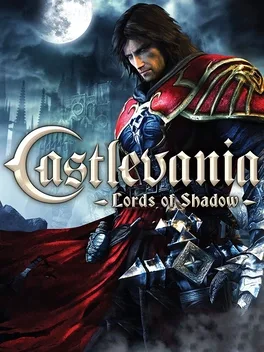
Castlevania: Lords of Shadow
MercurySteam's reboot trades whips-and-stairs for combo meters and Titan climbs, and it lands square in the middle of the series. The Titan sequences and the late-game bosses push properly hard, while the long stretches of light puzzle work in between pull the average back down. A competent action game wearing the name rather than the design.
- 19
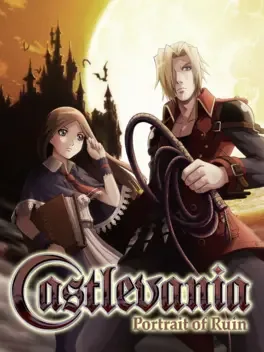
Castlevania: Portrait of Ruin
Swapping between Jonathan and Charlotte on the fly is the hook, and it also means you always have an answer to whatever the room throws at you. Legion and the Whip's Memory gauntlet are the spikes worth bracing for. The optional Hard mode with a level cap of 1 is where this game earns a number this high, and dedicated players clearly went there.
- 20
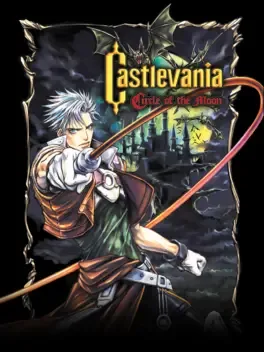
Castlevania: Circle of the Moon
The first GBA entry is also the least forgiving of the three. Nathan starts weak, the DSS card system gates your power behind rare drops, and both Death and Camilla can stop a run cold if the cards have not cooperated. Players remember the unlit original screen, but the 7.24 is really about that RNG gate.
- 21
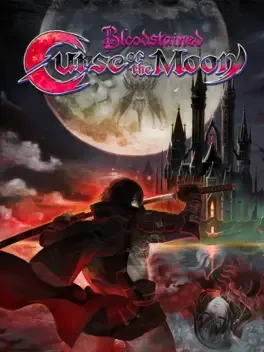
Bloodstained: Curse of the Moon
Inti Creates built Igarashi a Classicvania as a Kickstarter stretch goal and took the brief literally: stiff jumps, real recovery frames, and knockback that Casual mode strips out and Veteran mode hands straight back. The score here is the sound of people picking Veteran. The closest thing to a brand new NES Castlevania that anyone has managed to make.
- 22
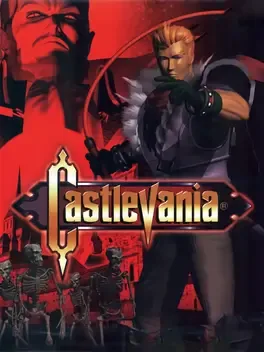
Castlevania 64
The first swing at 3D, and the difficulty has almost nothing to do with Dracula. Carrying nitro and mandragora across Castle Center without getting hit, surviving the Villa maze, and racing the real-time clock all fight you harder than any boss. Opinions split hard here, from 2s to 10s, which is about right for a game this awkward.
- 23
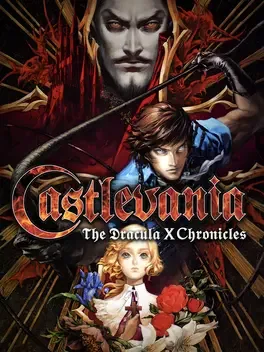
Castlevania: The Dracula X Chronicles
The PSP remake rebuilds Rondo of Blood in 2.5D and bundles the originals plus Symphony of the Night as unlockables. The new engine is slightly more generous than the PC Engine version it adapts, and the 7.05 sits a full point below the original's 8.06. The best single package in the series, and a softer ride than the source.
- 24
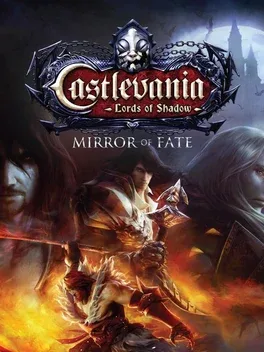
Castlevania: Lords of Shadow - Mirror of Fate
A 2.5D bridge between the two Lords of Shadow games, built around combat arenas rather than platforming. Three playable Belmonts across four chapters keeps it varied, and the tightest vote spread in this list, nothing below 5 or above 8, says players broadly agree it is middling. Nobody got wrecked, nobody coasted.
- 25
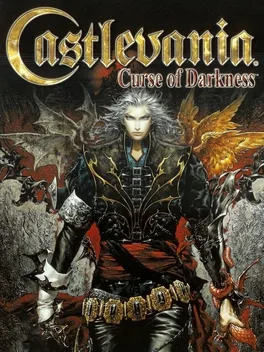
Castlevania: Curse of Darkness
Hector's Innocent Devil companions can be levelled into something absurd, which is the whole reason this sits where it does. The dungeons are long and repetitive, so the real cost is time rather than skill. Get the right Innocent Devil online and the back half of the game stops resisting you altogether.
- 26
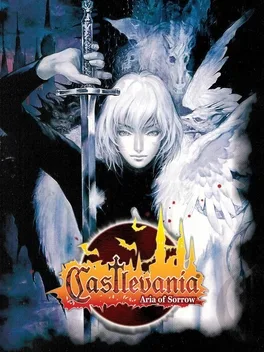
Castlevania: Aria of Sorrow
Widely held up as the best of the GBA trio and rated one of the easier games in the series, which tracks. The soul system hands you a toolkit broad enough to trivialize most encounters, and Soma scales fast. The Chaotic Realm finale has teeth, but by then you have usually broken the game over your knee.
- 27
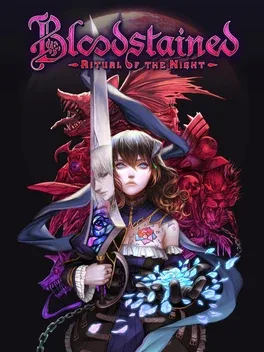
Bloodstained: Ritual of the Night
Igarashi rebuilt his own template with a Kickstarter behind him, and the difficulty landed exactly where you would expect: a little above Symphony of the Night, a little below the DS games. Miriam's shard system is generous enough that a losing fight is usually a loadout problem rather than a skill one. Faithful to the formula, which means forgiving.
- 28
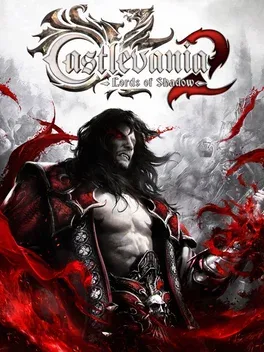
Castlevania: Lords of Shadow 2
You play Dracula himself, which creates the obvious problem: you are the strongest thing in the game. The combat is deep and the boss fights are reasonable, and then the stealth sections arrive and replace difficulty with irritation. A 6.36 for a game where failure usually means being spotted rather than outfought.
- 29
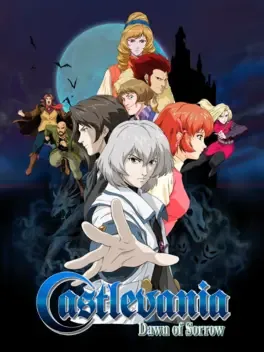
Castlevania: Dawn of Sorrow
The direct sequel to Aria of Sorrow carries over the soul system and adds the touchscreen magic seals, which annoyed more people than they challenged. Soma is strong from early on, the map is generous with save rooms, and Julius Mode exists mostly as a victory lap. Comfortable, which is not an insult for a game this well made.
- 30
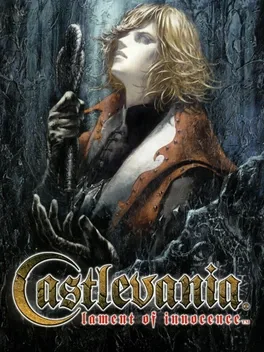
Castlevania: Lament of Innocence
Leon Belmont's PS2 debut built its castle out of near-identical corridors, and repetition is the defining experience rather than challenge. The whip combos feel good and the orb system gives you plenty of outs. Pluto and Death put up a fight, and almost nothing else in the building does.
- 31
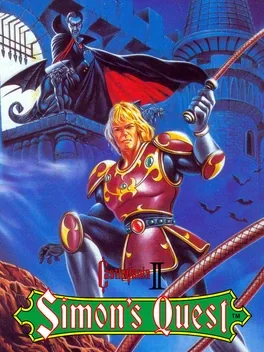
Castlevania II: Simon's Quest
The famous one, and the vote confirms what the argument has always been: Simon's Quest is not mechanically hard, it is obtuse. Grinding hearts off respawning enemies, kneeling at Deborah Cliff with a red crystal, and townsfolk who lie to you are obstacles no amount of skill clears. Ratings run from 1 to 8, which is the sound of people disagreeing about whether confusion counts as difficulty.
- 32
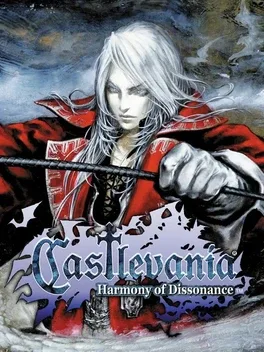
Castlevania: Harmony of Dissonance
Juste moves faster than anyone in the series and the spellbook combinations break the game wide open once you find a pairing you like. Two overlapping castles double the map without doubling the threat. The lowest-rated of the three GBA entries, and the one that most feels like it was built for speed rather than struggle.
- 33
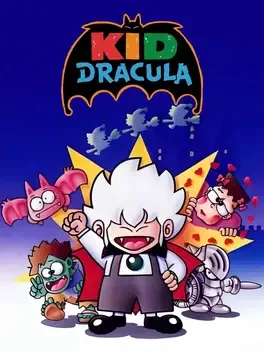
Kid Dracula (Famicom)
The Famicom spin-off that recasts the whole thing as a cheerful platformer about a tiny Dracula. It is far from a pushover in the back half, where the stage design starts asking for real precision jumps, and it still rates easier than every mainline entry. Konami making fun of its own house style and getting away with it.
- 34
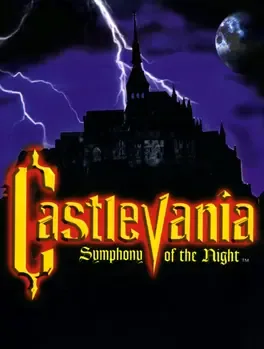
Castlevania: Symphony of the Night
The most-rated game in this list at 42 votes, and the second-easiest. That is not a knock, it is the design. Alucard starts strong and ends absurd, the Shield Rod combination and the Crissaegrim delete bosses outright, and the inverted castle is a victory lap with a map attached. The best Castlevania and nowhere near the hardest.
- 35
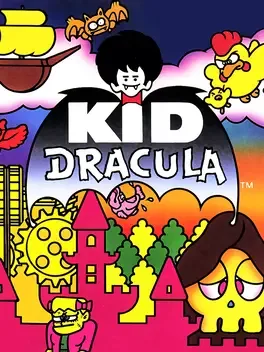
Kid Dracula (Game Boy)
The Game Boy remake trims stages and sands down the Famicom version's rougher jumps, and the result is the gentlest thing with Konami's vampire branding on it. No rating above 7 from anyone who played it. If you want to see where the series started before it decided to hurt you, this is the softest landing available.
Where the Votes Surprised Us
Haunted Castle at number one is correct and still startling. An arcade game with a fraction of the votes of the famous entries beat all of them, and anyone who has fed it coins knows why. The NES original sitting at 8.20 across 35 ratings is the number we trust most on the whole board.
Simon's Quest is the argument this list cannot settle. At 6.27 it sits in the bottom five, well below games it is routinely called harder than. Its votes run from 1 all the way to 8, and that spread is the real answer: being lost is not the same as being outplayed, and players split on whether it counts.
Castlevania 64 should probably be higher. 7.13 puts it mid-pack, below Circle of the Moon, which feels generous to a game where a timed nitro escort and a hostile camera do most of the damage. Its ratings scatter from 2 to 10, so the average is hiding a genuine disagreement rather than reporting a consensus.
Is Castlevania Hard? Final Verdict
It depends entirely on which Castlevania you pick up, and the gap is wide enough to make the question almost meaningless. The seventeen classic 2D entries average 7.90 and peak with Haunted Castle at 9.13/10. The eight metroidvanias average 6.67, and the 3D games land between the two at 6.84. Kid Dracula on Game Boy bottoms the whole list out at 5.53. Start with the NES trilogy and Castlevania is one of the hardest series in games. Start with Symphony of the Night and you may never find out why it has that reputation.
Rate Castlevania III: Dracula's Curse →How This List Is Built
- Source: Player-submitted difficulty ratings on How Difficult Is It?
- Scope: Every Castlevania action-platformer, exploration entry and 3D entry, including the arcade and MSX2 versions and the two Kid Dracula spin-offs. Genre spin-offs are left out because their difficulty does not compare like for like: the fighting game Judgment, the puzzle game Encore of the Night, and the mobile releases Order of Shadows and Grimoire of Souls.
- The three non-Castlevanias: Bloodstained: Ritual of the Night, Curse of the Moon and Curse of the Moon 2. An Igavania here means a game Koji Igarashi actually worked on, not a game that resembles his. Authorship is the only line that holds: judged on resemblance, the list would have to absorb Touhou Luna Nights, Timespinner, Deedlit in Wonder Labyrinth and a long tail of other tributes. Those belong in the metroidvania ranking instead.
- The filters: Two independent axes. Castlevania is about the licence, metroidvania is about the shape, and both filters narrow, so ticking both leaves the seven Castlevania metroidvanias. The two Curse of the Moon games are neither a Castlevania nor a metroidvania, so they appear only with both filters off. Every entry shows its rank in the current view and its rank in the full 35.
- Remakes and ports: Counted as separate entries where they changed the game, so Rondo of Blood and its PSP remake both appear. Straight re-releases and collection bundles do not.
- What the score means: Average of all player ratings from 1 to 10, based on each voter's own playthrough.
- Sort method: Average difficulty score, highest first, so rank 1 is the hardest.
- Snapshot: Numbers captured October 2026. For live figures, see the rankings page.
Frequently Asked Questions
What is the hardest Castlevania game?
In How Difficult Is It? player votes, Haunted Castle is the hardest at 9.13 out of 10. It is the 1988 arcade game, built around a two-hit health bar and a whip that downgrades when you take damage. Among games most people actually own, Castlevania III: Dracula's Curse is the hardest at 8.96.
What is the easiest Castlevania game?
The Game Boy version of Kid Dracula sits lowest at 5.53 out of 10, with Symphony of the Night just above it at 5.55. Among the mainline games, Symphony of the Night is the easiest, largely because Alucard becomes overpowered well before the end.
Is Symphony of the Night hard?
No. Players rate it 5.55 out of 10 across 42 ratings, the largest sample in the series and one of the lowest scores. Alucard levels quickly, and item combinations like the Shield Rod and the Crissaegrim trivialize most boss fights. It is widely considered the best Castlevania, not the hardest.
Which Castlevania game should I start with?
Symphony of the Night at 5.55 or Aria of Sorrow at 6.53 are the gentlest entries into the exploration style. If you want the classic stage-based design without the arcade cruelty, Super Castlevania IV at 7.55 is the most forgiving of that era thanks to its eight-way whip.
Are the metroidvania Castlevanias easier than the classic ones?
Clearly, yes. The twelve hardest games in the ranking are all classic stage-based entries, every one of them above 8.0, and no metroidvania reaches that top twelve at all. The eight metroidvanias average 6.67 against 7.90 for the classic 2D games, and the hardest of them is Order of Ecclesia at 7.82 in 13th. Levelling, save rooms and equipment all cut against difficulty in ways a fixed-stage classic entry never allowed.
Why are the Bloodstained games in a Castlevania ranking?
Because Koji Igarashi made them. He produced or directed most of the Castlevania games from Symphony of the Night onward, left Konami in 2014, and built Bloodstained as a direct continuation of that work. Those three games are the only non-Castlevania titles in this ranking. Games that merely resemble his, such as Touhou Luna Nights or Timespinner, are not included, because resemblance has no edge to it and authorship does.
Are these difficulty scores official?
No. They are averaged from How Difficult Is It? players rating each game from 1 to 10 based on their own playthrough. Sample sizes range from 15 to 42 votes per game, so treat the extremes as solid and the middle as a rough consensus. See the live rankings for current numbers.