The Hardest Roguelikes and Roguelites, Ranked by Player Votes
Last updated: September 2026
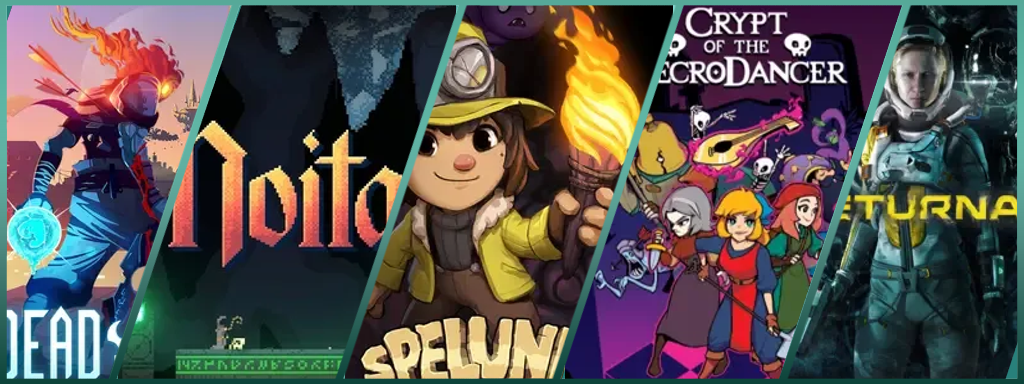
Looking for a popularity contest? Well when it comes to all flavors of Rogue, the most-rated game in the genre is Hades, with 38 votes. It averages 6.97 out of 10 for difficulty. Vampire Survivors averages 3.60. These games may have popularized the genre to a modern audience, but they are not even close to the hardest ones.
Eleven of the sixteen games on this list score 8.0 or above. That density does not hold in most other genre categories on this site. Roguelikes have an unusually hard floor, and the games at the top are not hiding it.
NetHack and Noita trade the top position separated by a hundredth of a point. The drop-off from rank eleven to twelve is the sharpest on the list: from 8.09 down to 7.88, and from purely traditional roguelikes to a mix of old-school and action. The genre contains multitudes and the top end is unambiguous.
The Roguelike Spectrum
Roguelike and roguelite are not the same word, but they describe games on a spectrum rather than two separate categories. Both are included here.
Traditional roguelikes, the games in the genre's older lineage, run on permadeath with no persistent upgrades. When you die, you start from nothing: same character slot, empty inventory, fresh dungeon. NetHack, Angband, Dungeon Crawl Stone Soup, and Caves of Qud are all this type. They hold the top eleven spots almost exclusively.
Roguelites soften that design by adding meta-progression: upgrades, unlocks, or currencies that persist between runs and reduce the cost of dying. Hades, Dead Cells, and Returnal are roguelites. They appear here because players rate them alongside their stricter counterparts.
The rankings make the split visible. Traditional roguelikes hold the top half almost exclusively. Roguelites cluster lower, not because they are easy, but because the ceiling above them is genuinely higher.
Full Rankings: Top 20 Hardest Roguelikes and Roguelites
- 1
NetHack
The game that defined the genre in 1987, and still producing deaths that experienced players have never seen. NetHack's system depth is not a feature — it is the game. Every item interaction, every monster special ability, every dungeon level has a mechanics layer most players will never fully map. Nineteen raters agree on one thing: the difficulty is not in doubt.
- 2
Noita
Every pixel in the world simulates. That is the premise, and it is also where most runs end. Fire spreads, liquids mix, spells chain and misfire, and the wand system has a learning curve that functions as a separate game. Noita is not just hard to survive — it is hard to understand. Two thirds of its raters gave it an 8 or higher. The ones who gave it a 10 probably know the most about it.
- 3
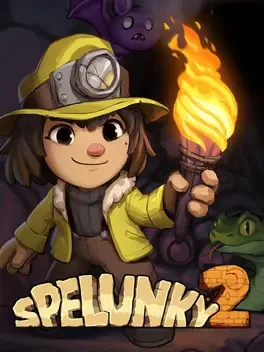
Spelunky 2
Leads the chart by a single hundredth of a point over NetHack. Spelunky 2 builds on one of the sharpest physics-based platformers ever made, then adds branching paths and zones that punish players who assume the first game's rules still apply. The ghost timer, the instant-kill ledge physics, the shopkeeper economy: none of it forgives inattention. With more votes than any other game in the top five, the distribution holds steady. Nobody scored it below 7.
- 4
Dungeon Crawl Stone Soup
Free and open-source, continuously developed since 1997. DCSS strips roguelike design to its systems and nothing else: no soundtrack required, no graphical frills, pure mechanics. The difficulty lives in how those systems interact at the wrong moment. Fourteen raters place it just below the tied pair above it, consistent with DCSS's reputation among players who have been here before.
- 5
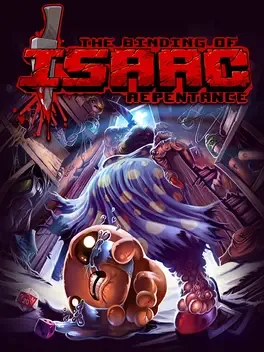
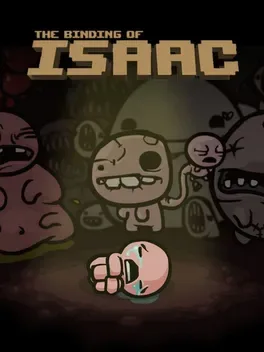
The Binding of Isaac: Repentance
The final major expansion more than doubled the item pool and added a second final boss sequence that requires sustained knowledge of dozens of synergies to reach. Repentance is the hardest version of Isaac precisely because the ceiling is higher. Completing every item challenge, every character unlock, and every floor variant is a task most players leave unfinished years in. Nineteen raters at 8.32: it earns its placement.
- 6
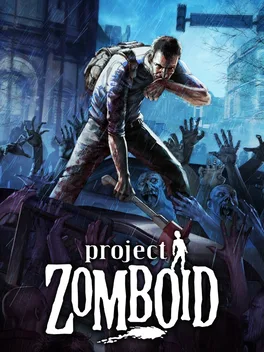
Project Zomboid
Rated 8.27/10 in difficulty by 30 players on How Difficult Is It?.
- 7
Caves of Qud
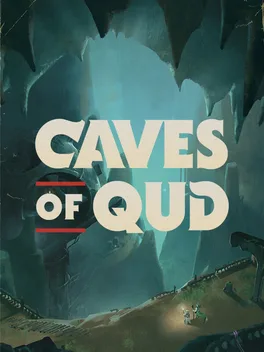
A post-apocalyptic roguelike with a scope most games don't attempt. Caves of Qud is hard in unconventional ways: the world has physical laws, faction relationships, and procedural secrets that intersect in moments the game never announces. The learning curve is steep for experienced roguelike players, not just new ones. Thirteen raters placed it at 8.23, a score that respects the depth.
- 8
Jupiter Hell
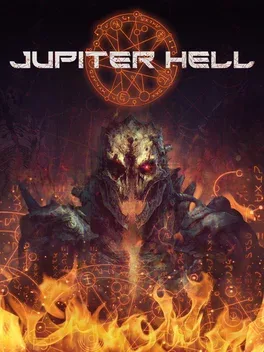
A turn-based tactical roguelike built in the tradition of DoomRL. Sight lines, cover, ammo conservation, and level knowledge all compound across a run that does not forgive careless play. Its rating distribution is the most polarized in the top ten: a handful of outliers at the low end, a cluster at 10. The average lands at 8.33 regardless.
- 9
Angband
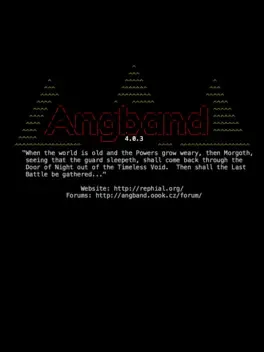
Older than most games on this list and still actively played. ASCII dungeon, 100 floors, and a final boss that will destroy characters you have spent hours building if approached underprepared. Angband is not hard the way modern games are hard: there is no fail animation, no telegraphing, just the dungeon and the result. Ten raters. Average 8.20. Nobody was surprised.
- 10
ADOM: Ancient Domains of Mystery
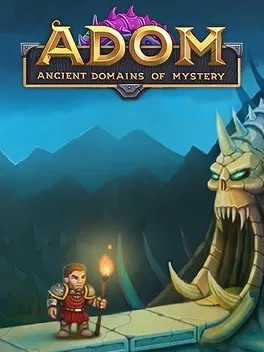
One of the oldest shareware roguelikes and one of the most mechanically dense. ADOM layers class, alignment, corruption mechanics, and timed events into runs that collapse in ways that feel instructive rather than arbitrary. Eleven raters put it just outside the top ten at 8.09.
- 11
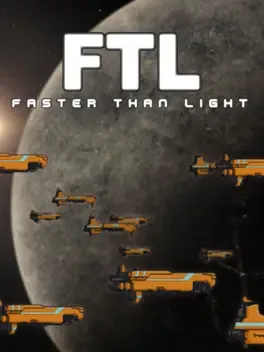
FTL: Faster Than Light
Tied with Isaac but a different kind of difficulty. FTL's challenge is resource management across eight sectors, where each decision compounds into a final boss encounter that ends most runs not specifically built to fight it. Normal mode is hard; Hard mode removes most of the margin Normal leaves you. Nineteen raters at 8.32 make its spot in the top ten stable.
- 12
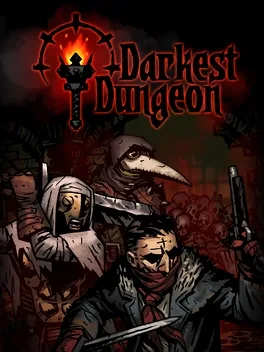
Darkest Dungeon
A roguelite that turns resource management into psychological management. The stress mechanic adds a second failure track alongside HP: let it fill and your heroes gain afflictions, become cowardly, or break outright. Long dungeon runs, permanent party member loss, and outcomes that punish good play make it one of the harder roguelites on the site. The largest sample in this section at 24 votes.
- 13
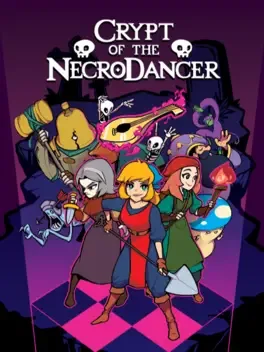
Crypt of the NecroDancer
The rhythm mechanic sounds like a gimmick until the fourth dungeon, at which point it has become load-bearing. Enemies move on beat. Miss the beat and they get a free action. The game is not asking you to press buttons to music — it is asking you to maintain rhythm under pressure while reading six enemy patterns simultaneously. The full Cadence unlock removes the music assist entirely.
- 14
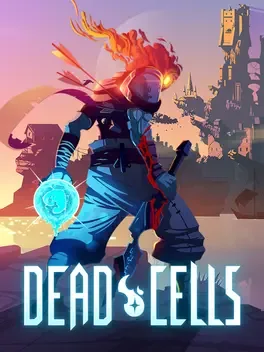
Dead Cells
The most-voted entry in the action roguelite section with 29 ratings. Dead Cells scales difficulty through Boss Cells: up to five tiers, each adding faster enemies, more aggressive elites, and smaller margins for error. At higher cell counts, a bad encounter late in a long run is frequently unrecoverable. Most raters gave it a 7 or 8, with a tail at 9 and a few outliers in both directions.
- 15
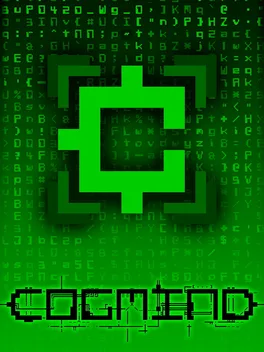
Cogmind
A sci-fi roguelike where the player character is a robot assembled from salvaged parts. Every component affects movement speed, energy, and armor. Losing parts mid-run changes what the current run can accomplish. Cogmind has a dedicated following among players who value systems depth over visual presentation.
- 16
Brogue
One of the most respected traditional roguelikes for balancing approachable presentation with genuine depth. Brogue strips the genre visually and mechanically, then achieves difficulty through the elegance of its systems rather than their volume. Twelve raters at 7.75.
- 17
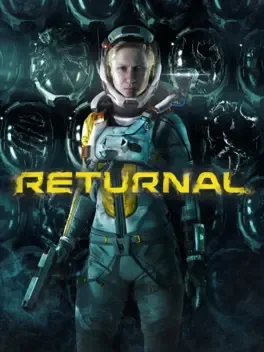
Returnal
A third-person bullet hell roguelite with no difficulty settings and no persistent progress beyond passive upgrades. Bullet patterns are dense and fast, weapons are randomized each run, and death resets everything. Twenty-one ratings make its placement solid: most raters landed between 7 and 9.
- 18
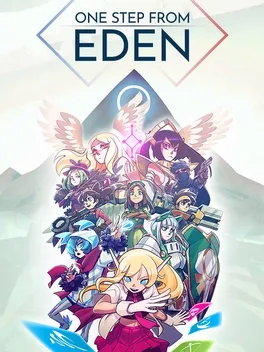
One Step From Eden
Rated 7.57/10 in difficulty by 14 players on How Difficult Is It?.
- 19
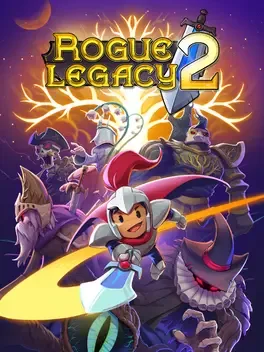
Rogue Legacy 2
Rated 7.50/10 in difficulty by 20 players on How Difficult Is It?.
- 20
Rift Wizard
Rated 7.50/10 in difficulty by 12 players on How Difficult Is It?.
How This List Is Built
Every game on this list was rated by real players on How Difficult Is It?. The ranking is based on each game's average difficulty score, with a minimum of 5 ratings required to qualify. This is a monthly snapshot; for live rankings that update every hour, see the rankings page.
- Source: Player-submitted difficulty ratings on How Difficult Is It?
- Genre scope: Traditional roguelikes and action roguelites, including both permadeath-only and meta-progression designs
- Minimum ratings: At least 5 player ratings required to appear
- Sort method: Average difficulty score, highest first. Rating count breaks ties.
- Exclusions: Disqualified or flagged ratings are removed before scoring.
- Update frequency: Monthly snapshot
Frequently Asked Questions
What is the hardest roguelike according to player ratings?
As of September 2026, NetHack leads at 8.89/10 from 19 player ratings on How Difficult Is It?. Every game in the top ten scores 8.0 or above.
How is this ranking calculated?
Games are ranked by their average difficulty score submitted by players on How Difficult Is It?. Only games with at least 5 ratings are included. Disqualified or spam ratings are excluded. Games with equal average scores are sorted by number of ratings. Both traditional roguelikes and roguelites are included.
Why do traditional roguelikes rank harder than roguelites?
Traditional roguelikes have permadeath with no persistent upgrades: every run starts from nothing. Roguelites add meta-progression that reduces the cost of dying. The ratings reflect this split, with traditional roguelikes holding the top half almost exclusively.
Is Hades considered a hard game?
Moderately hard according to player ratings on How Difficult Is It?. Several roguelikes score significantly higher on average difficulty.
Can I add my own difficulty rating?
Yes. Create a free account on How Difficult Is It? and rate any game you have played. Your rating is included in the community average and updates the live rankings within the hour.