The Hardest Precision Platformers, Ranked by Player Votes
Last updated: June 2026
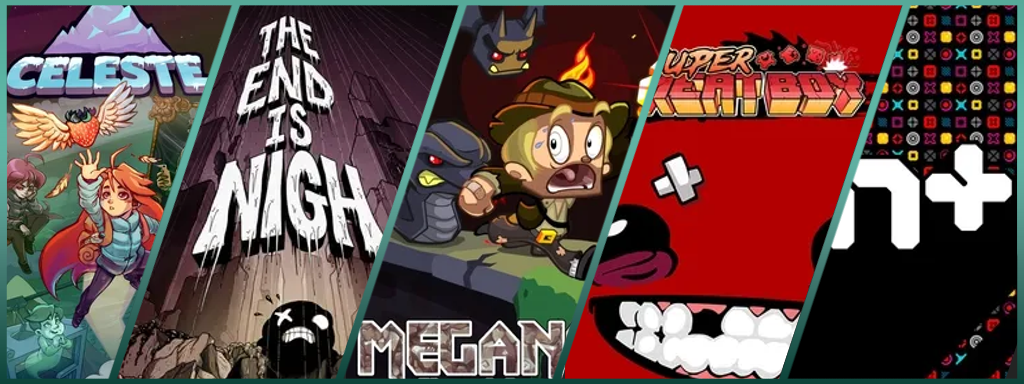
While platformers come in a wide range of difficulties (from Mario to Meat Boy), Precision Platformers are known to be one of the most challenging sub-genres around. It's right there in the name: precision!
We're including both 2D and 3D games in this list, but we're not including fan-made games. While that cuts out some well-known killers like I Wanna Be the Guy and Boshy, including them all would unfortunately crowd the list with plenty of absurdly hyperchallenging (and sometimes near-impossible) Kaizo-level content. Be on the lookout for a future "hardest fan games" article though!
What Counts as a Precision Platformer?
The genre does not have clean edges. For this list, a precision platformer is any game where the primary challenge is executing tight movement sequences with little or no margin for error: pixel-perfect jumps, frame-precise inputs, or sustained errorless runs over long stretches.
Games like Spelunky 2 and Dead Cells involve a lot of precise platforming, but their core loop is roguelike: the difficulty is about adapting to procedural runs rather than memorising a fixed sequence. Those games are covered in the hardest roguelikes article.
3D platformers are included in principle. Notably, Super Mario Sunshine (4.40/10 from 25 ratings) and Super Mario Galaxy 2 (3.74/10 from 19 ratings) are both in the database but rate low overall, because the majority of each game is accessible. Their hardest individual sections, such as Sunshine's pachinko machine or Galaxy 2's Perfect Run, are well-known difficulty spikes, but the average difficulty score reflects the full experience.
Without further ado, here are your most challenging precision platformers, as rated by the members of this site!
Full Rankings: Top 32 Hardest Precision Platformers
- 1
Meganoid: Chronicles
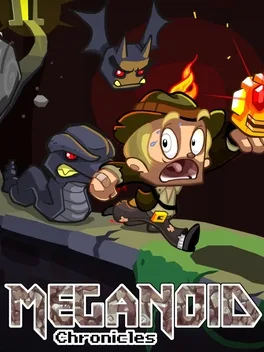
A mobile-to-PC precision platformer that flies under almost every radar. Meganoid: Chronicles builds its challenge from the simplest possible movement, jump and fall, applied to level architecture that offers almost no slack. Every screen is a puzzle of momentum and timing with nothing to save you from a mistake. Six ratings, and a score distribution that goes no lower than 9. The people who found this one are not conflicted about how hard it is.
- 2
Battletoads
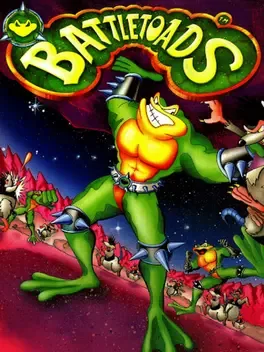
Battletoads was engineered to be unbeatable over a weekend rental. The theory: keep the game in the shop, keep the revenue coming. The Turbo Tunnel became one of the most infamous stages in gaming history: a speeder bike level demanding frame-precise dodges at escalating speed, arriving at level 3 before most players were prepared for it. Yes, Battletoads is primarily a beat-em-up. But the Clinger-Winger, Volkmire's Inferno, and the Turbo Tunnel make the precision platforming demands impossible to ignore. Fourteen ratings, 9.14 average.
- 3

Wings of Vi
An angel with wings must defeat a demon lord. Wings of Vi draws openly from the I Wanna Be the Guy tradition in its level design: hostile layouts, constant telegraphed deaths, and the expectation that you will fail hundreds of times before learning any given section. The difference from a fangame is that Wings of Vi is polished, structured, and built with deliberate craft. It is one of the hardest commercial precision platformers ever made. Eleven ratings, 9.09 average, with five perfect 10s. Nobody scored it below 8.
- 4

Super Meat Boy
The standard by which every modern precision platformer is judged. Super Meat Boy made the genre mainstream in 2010, and its physics model, strict, predictable, and rewarding to master, has been imitated constantly since. The difficulty escalates through the world maps, then turns sharply: dark world variants replace regular stages with layouts that assume perfect execution as a baseline. Cotton Alley Dark is among the hardest formally structured content in any commercial precision platformer. Thirty ratings, 9.03 average.
- 5

Super Meat Boy Forever
The 2020 auto-runner sequel strips directional control and replaces it with two inputs: jump and slide. Removing one axis of control means every jump timing is now fully load-bearing, and the procedural level system produces combinations that demand real pattern recognition. Seven ratings, 9.00 average, right at the minimum threshold, but the consensus is clean.
- 6

The Lion King
Same rental-era design theory as Battletoads: make it hard enough that a weekend rental won't cut it, keep the game on the shelf, keep the revenue coming. The developers may have overshot slightly. The second level, Be Prepared, features a monkey-throwing section that stopped an extraordinary number of players who thought they were in a normal licensed-game experience. The final levels are brutal throughout. Eleven ratings, 8.91 average. Too hilarious a case study to leave off this list.
- 7
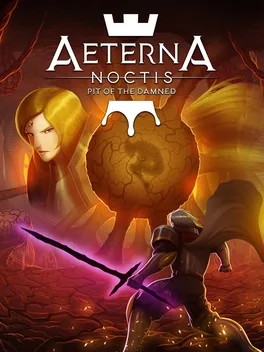
Aeterna Noctis
Yes, it is a Metroidvania, and it tops our hardest Metroidvanias list too. But Aeterna Noctis is also renowned for precision platforming sections so demanding they belong here regardless of genre classification. Entire areas of the game are built around executing perfect movement sequences: wall jump chains, dash timing through instant-kill hazards, and frame-tight corridors that rival any dedicated precision platformer. The Metroidvania structure surrounds some of the hardest pure platforming in a commercial game. Nine ratings, 8.89 average.
- 8
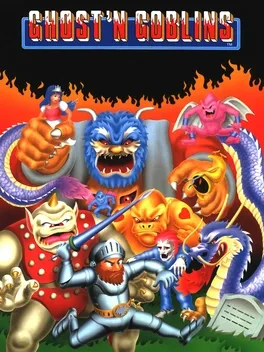
Ghosts 'n Goblins
The 1985 Capcom arcade classic. Arthur must complete the game twice in a row to see the real ending: a full first-loop clear results in a cutscene informing you to start over. The two-hit death system, brutal enemy respawning, and unforgiving jump physics made Ghosts 'n Goblins the defining punishing platformer of its era. With 21 ratings, it is the most-voted game in this score tier.
- 9

1001 Spikes
A tribute to NES-era punishing platformer design. The game gives Aban Hawkins 1001 lives to clear the world, a number simultaneously generous and insufficient. Trap-laden corridors, instant-kill spikes, and careful pattern recognition are required throughout a large world with multiple distinct characters and campaigns. Thirteen ratings, 8.80 average.
- 10
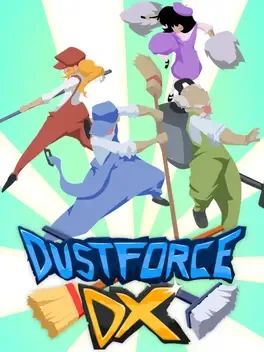
Dustforce DX
A movement-precision game built around maintaining momentum while cleaning every dust particle from a level without breaking combo. The early game is welcoming; the later missions are not. SS-ranking every level requires navigating tight corridors, wall-runs, and aerial sequences without a single dropped input. Eleven ratings, 8.80 average.
- 11
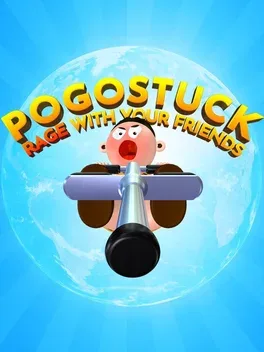
Pogostuck: Rage With Your Friends
A one-pogo-stick ascent game in the tradition of Getting Over It: no checkpoints, and falls return you deep into the tower. The stick behaves physically and predictably, but translating that into consistent high-altitude progress takes extended practice. Fourteen ratings, 8.80 average. Four games share this score; they are ordered alphabetically.
- 12
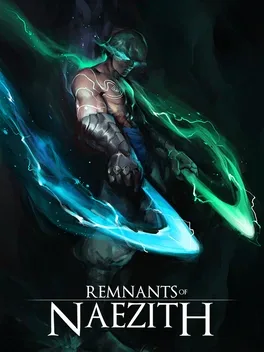
Remnants of Naezith
A grappling-hook precision platformer built entirely around swinging mechanics. Every level requires chaining grapples through tight corridors at speed; the physics demand understanding of momentum, arc, and release timing that takes hours to fully internalise. Remnants of Naezith exists almost entirely outside the mainstream radar. Twelve ratings, 8.80 average.
- 13
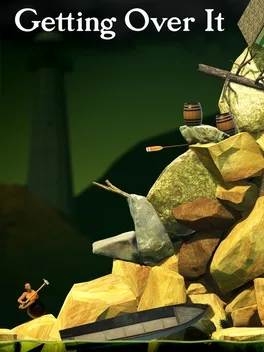
Getting Over It with Bennett Foddy
A hammer, a cauldron, a mountain. Bennett Foddy narrates your struggle. Getting Over It's controls are purposefully obtuse: a hammer on physics simulation rather than direct input, where a fall returns you to near the bottom of a multi-hour climb with no safety net. Eighteen ratings, 8.67 average.
- 14
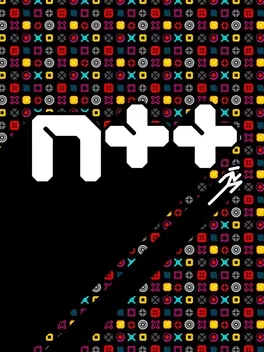
N++
The ninja movement game at its fullest iteration. N++'s physics model captures the exact momentum and friction curves of a small ninja navigating levels filled with mines, thwumps, and gauss turrets. The episode count runs to several thousand levels between the main game and user-created content. Nine ratings, 8.60 average.
- 15

A Difficult Game About Climbing
The 2024 spiritual successor to Getting Over It: complex physics-based climbing controls, no checkpoints, and falls that send you right back down. The game names its difficulty in the title and delivers on the promise. Thirteen ratings, 8.50 average.
- 16

Sunblaze
A precision platformer built around a teacher accidentally trapped in a virtual training simulation. Sunblaze escalates from introductory to brutal across 200+ levels, with the late-game demanding tight execution and memorisation at the same level as the genre's top entries. Eleven ratings, 8.50 average, tied with A Difficult Game About Climbing and separated alphabetically.
- 17

Cuphead
Technically a run-and-gun, but the precision platformer parallel is hard to dismiss. Cuphead's boss-first design means most difficulty comes from reading multi-phase attack patterns in extended fights with no mid-fight checkpoints. With 51 ratings, it has the most statistically stable score on this list: more players have submitted a difficulty rating here than for any other game in this ranking.
- 18
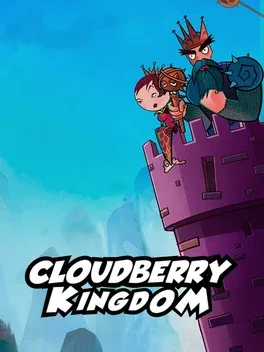
Cloudberry Kingdom
A procedurally generated precision platformer that can theoretically produce levels of any difficulty, up to and including mathematically solvable but humanly unachievable. The campaign presents an auto-escalating challenge across multiple characters with distinct movement sets; as the level counter climbs, the layouts shift from hard to absurd to something resembling a stress test. Twelve ratings, 8.40 average.
- 19

Flywrench
From Mark Essen, creator of Nidhogg. A thin line of light must navigate neon corridors using only rotation and thrusters: minimal inputs, brutal momentum physics. Almost no mainstream visibility for something this demanding. Nine ratings, 8.30 average, from players who found it.
- 20

VVVVVV
A gravity-flip platformer built on a single mechanic applied relentlessly. The main game feels accessible for its first few areas; then Veni Vidi Vici appears: a room requiring dozens of consecutive gravity flips between spike walls with zero margin for error. Fourteen ratings, 8.21 average.
- 21
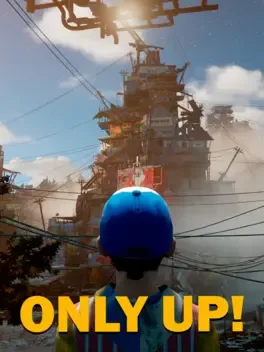
Only Up!
No checkpoints, no save points, one vertical climb. A fall from near the top returns you to near the bottom. Only Up! sits in the same tradition as Getting Over It and Jump King but uses conventional platforming inputs. Eleven ratings, 8.20 average.
- 22
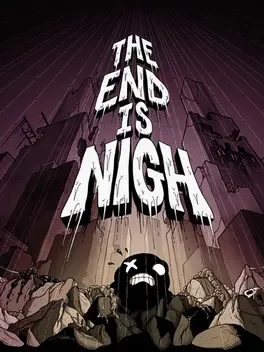
The End Is Nigh
Edmund McMillen (Super Meat Boy) applied the same precision platformer DNA to a longer, darker game. Spike and obstacle density is total throughout. Tumour collection adds a precision layer beyond base completion. The optional areas escalate to near-Super-Meat-Boy territory. Eleven ratings, 8.18 average.
- 23

Jump King
One button determines jump height. No air control adjusts trajectory once airborne. A fall from high in the castle takes you most of the way back to the bottom. Jump King spawned a streaming genre of its own: speed runs and fail compilations both thrive because the failure mode is immediate, visible, and total. Fifteen ratings, 8.13 average.
- 24

Slime-san
A precision platformer where every level is completed against a time limit as a giant worm pursues you. The speed requirement forces commitment to inputs you have not fully scouted, which escalates challenge beyond layout alone. Thirteen ratings, 8.10 average.
- 25

Electronic Super Joy
A rhythm-infused precision platformer with an aggressively loud soundtrack and deliberately overwhelming visuals. Levels escalate quickly, boss fights are brutal, and several chapters feature auto-scrolling that turns rhythm-timing into a hard precision demand. Eleven ratings, 8.00 average. Three games share this score; they are ordered alphabetically.
- 26

Level Devil
A trap platformer where the environment itself is the opponent: platforms vanish, ceilings descend, floors spike up, and walls close in without warning. None of the hazards are random, but none are telegraphed either. You die to learn the pattern, then reset and run it clean. Fourteen ratings, 8.00 average.
- 27

Pseudoregalia
A low-poly 3D movement platformer built on an unusually expressive physics toolkit: a ball jump, wall kick, long-slide, and dream-breaker that chain together in ways the game never explicitly teaches. Reaching optional areas requires movement mastery built purely through experimentation. The difficulty ceiling is largely self-imposed, but players who push it find precision demands that earn the genre label. Twelve ratings, 8.00 average.
- 28
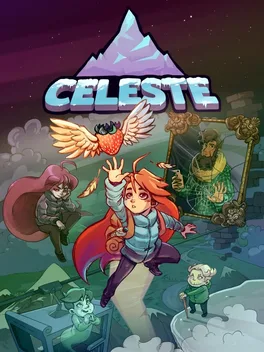
Celeste
The entry-point through which many players first encounter the genre at its upper reaches. The base game is demanding but forgiving by this list's standards. B-sides double the challenge; C-sides are short and severe; Farewell, added free post-launch, is harder still. Golden Strawberries require no-death full-chapter completion. With 38 ratings, Celeste has one of the most statistically stable scores on this list.
- 29
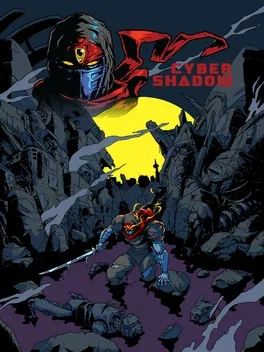
Cyber Shadow
A solo-developed retro action-platformer heavily inspired by the NES Ninja Gaiden series. Cyber Shadow escalates through its levels with the same platforming-under-pressure design as its inspirations: precise movement, limited resources, and boss fights that punish passive play. Eleven ratings, 7.80 average.
- 30

Hollow Knight
Yes, Hollow Knight is a Metroidvania. But it contains some of the most demanding precision platforming in any game. The Path of Pain, an optional hidden gauntlet in the White Palace, requires pixel-perfect dash and jump sequences through spikes with zero margin for error. The White Palace itself is brutal enough to have ambushed players who breezed the rest of the game. The Pantheon of Hallownest demands back-to-back completion of 42 boss fights without a single checkpoint. Hollow Knight's 7.58 reflects that the main game is approachable; the optional content absolutely is not. With 53 ratings, it has the largest sample on this list.
- 31

Celeste 64: Fragments of the Mountain
A free 3D spin-off made by the Celeste developers for the game's sixth anniversary. Shorter and more accessible than the main game, but the 3D momentum physics ask for movement control that surprises players expecting a brief holiday project. Nine ratings, 7.50 average.
- 32
Geometry Dash
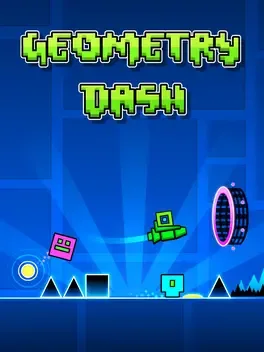
A rhythm-precision platformer where a single mistimed input resets the level from the start. The official campaign's later levels are genuinely demanding, but Geometry Dash's real difficulty ceiling is its user-created content: the Demon tier contains levels of near-theoretical difficulty far beyond anything in the base game. The 7.27 average reflects the full game including its accessible early chapters. Twenty-two ratings.
Honorable Mentions
Just missed the main list
These fit the genre but did not score high enough to crack the main list.
- Shovel Knight (7.21/10, 19 ratings). The harder campaigns, Spectre Knight and King Knight in particular, push toward precision platformer territory, and the optional Hall of Champions challenges are unambiguously demanding. Shovel Knight's primary design lineage is NES action-platformer rather than twitch precision, which keeps it just outside the core list. Nineteen ratings, 7.21 average.
Borderline genre
These games involve precision platforming but belong primarily to another genre, or their difficulty profile does not fit cleanly into this category.
- Spelunky 2 (8.67/10, 21 ratings). Would place thirteenth on this list at 8.67 from 21 ratings. Excluded because Spelunky 2 is primarily a roguelike: the platforming precision is crucial, but the core loop is permadeath runs with procedural adaptation rather than level memorisation. Already covered in our hardest roguelikes article.
- Neon White (6.50/10, 12 ratings). A speedrunning card-action game with precision platforming elements. At 6.50 from 12 ratings it falls below the difficulty threshold for this list, and the card-based mechanics make it a meaningfully different experience from the entries above.
How This List Is Built
Every game on this list was rated by real players on How Difficult Is It?. The ranking is based on each game's average difficulty score, submitted by people who have actually played it. This is a monthly snapshot; for live rankings that update every hour, see the rankings page.
- Source: Player-submitted difficulty ratings on How Difficult Is It?
- Genre scope: Precision platformers, 2D and 3D, excluding fan-made games
- Minimum ratings: At least 5 player ratings required to appear
- Sort method: Average difficulty score, highest first. Rating count breaks ties.
- Exclusions: Fan-made games are excluded. Disqualified or flagged ratings are removed before scoring.
- Update frequency: Monthly snapshot
Frequently Asked Questions
What is the hardest precision platformer according to player ratings?
Meganoid: Chronicles leads at 9.17/10 from 6 ratings, the minimum for inclusion, but with a score distribution that goes no lower than 9. Battletoads follows at 9.14. Wings of Vi is at 9.09, with Super Meat Boy at 9.03 from 30 ratings close behind.
Is Super Meat Boy the hardest precision platformer?
Not according to current player ratings. Super Meat Boy ranks #4 at 9.03/10 from 30 ratings. Meganoid: Chronicles, Battletoads, and Wings of Vi all rate higher. Super Meat Boy does have the most ratings of any game in the upper tier, making its score the most statistically reliable of the group.
Why is Hollow Knight on a precision platformer list?
Hollow Knight is primarily a Metroidvania, but it contains precision platforming sections demanding enough to belong here regardless of genre label. The Path of Pain, the White Palace, and the Pantheon of Hallownest all require levels of execution that rival dedicated precision platformers. Its 7.58 average from 53 ratings reflects that the main game is approachable, but those sections are not.
Why are Battletoads and The Lion King on this list?
Both games are infamous for difficulty deliberately engineered to prevent weekend rental completion: keep the game rented, keep the revenue coming. Battletoads' Turbo Tunnel and later stages include precision platforming demanding enough to rank 9.14/10. The Lion King's developers may have taken the same approach slightly further than intended, resulting in levels that are genuinely brutal throughout. The player ratings reflect it.
Does this list include I Wanna Be the Guy, Boshy, and Kaizo games?
No. Fan-made games are excluded from this article. They would dominate the top of any combined list: the Kamilia series, I Wanna Kill the Boshy, and similar titles consistently rate 9.5 and above on this site. A future article will cover the hardest fan games specifically.
How is this ranking calculated?
Every game on this list was rated by real players on How Difficult Is It?. Rankings are based on average difficulty score, with a minimum of 5 ratings required to appear. Disqualified or spam ratings are excluded. Fan-made games are filtered out. This is a snapshot from June 2026; for live rankings that update regularly, see the rankings page.
Can I add my own difficulty rating?
Yes. Create a free account on How Difficult Is It? and rate any game you have played. Your rating is included in the community average and updates the live rankings within the hour.